
Indigenous Rights in Brazil: Political Action and What Canada Can Learn
Authored by UMIH Intern Patrick Fermin
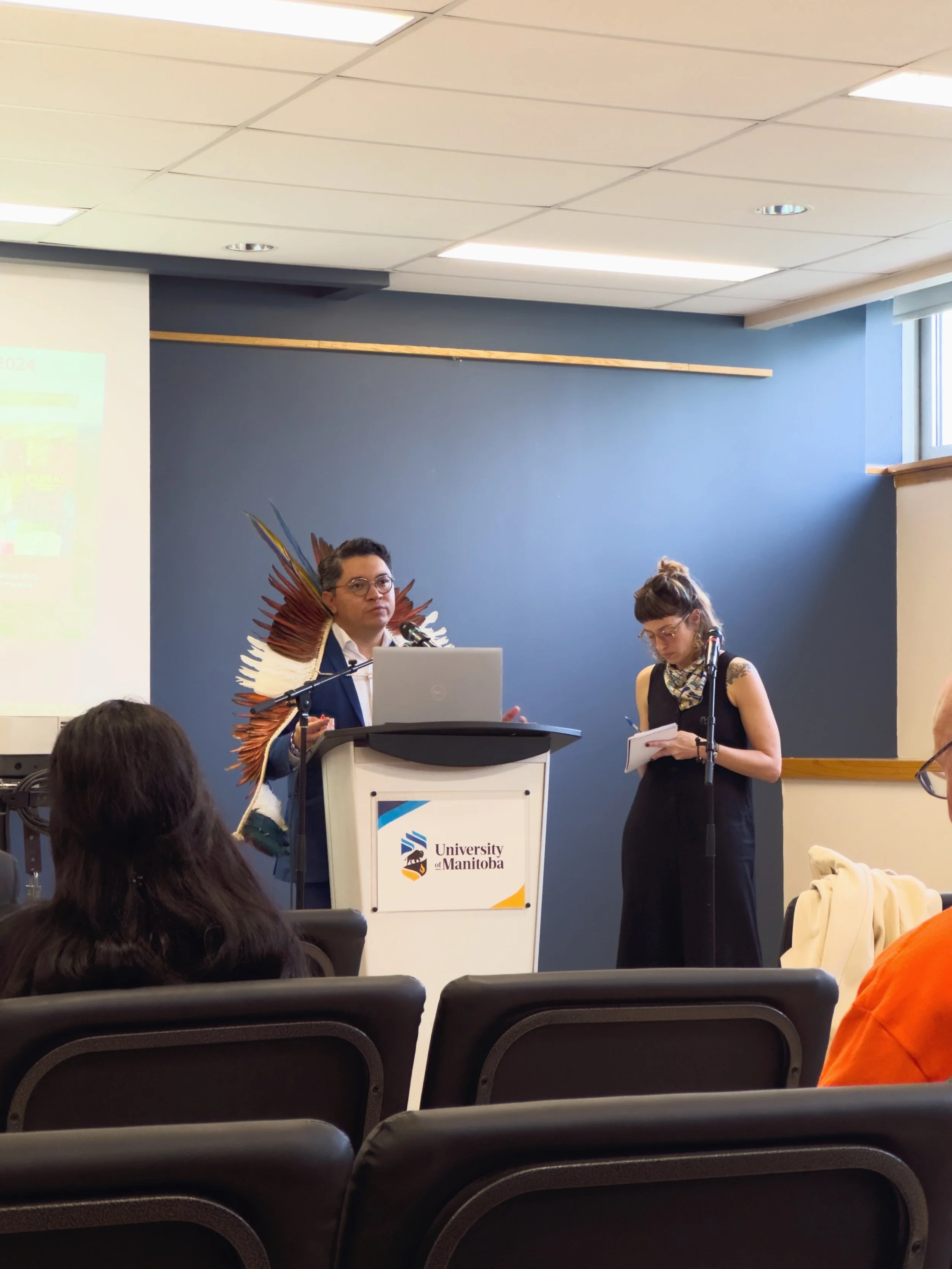
Dr. Eloy Terana during his lecture. October 1, 2025. Photograph by Patrick Fermin.
Indigenous rights and activism were at the forefront of Dr. Eloy Terena’s presentation “Indigenous Peoples and the Lula Administration: The Role of the Ministry of Indigenous People in Brazil.” Presented in his native language, Dr. Terena highlights the work of the Ministry of Indigenous Peoples in Brazil. He touches upon the new generation of activism and political work that is happening as Indigenous Brazilians take space in the country’s politics. The work done within the Lula government have made great changes in the country regarding Indigenous rights.
The most striking work that the government has done has been reclamation of Indigenous lands from illegal extractive capitalism. Dr. Terena used the term “disintrusion” to describe the ongoing eviction of illegal occupation of Indigenous lands in the Amazon by mining companies. These companies would obfuscate their illegal and harmful activities to the government and the public They are responsible for deforestation and they invade remote areas of the Amazon and displace Indigenous people. Moreover, the ministry discovered myriads of other exploitative activities that harmed the land. Gold and alluvial mining was responsible for the destruction of natural Indigenous lands and waterways.
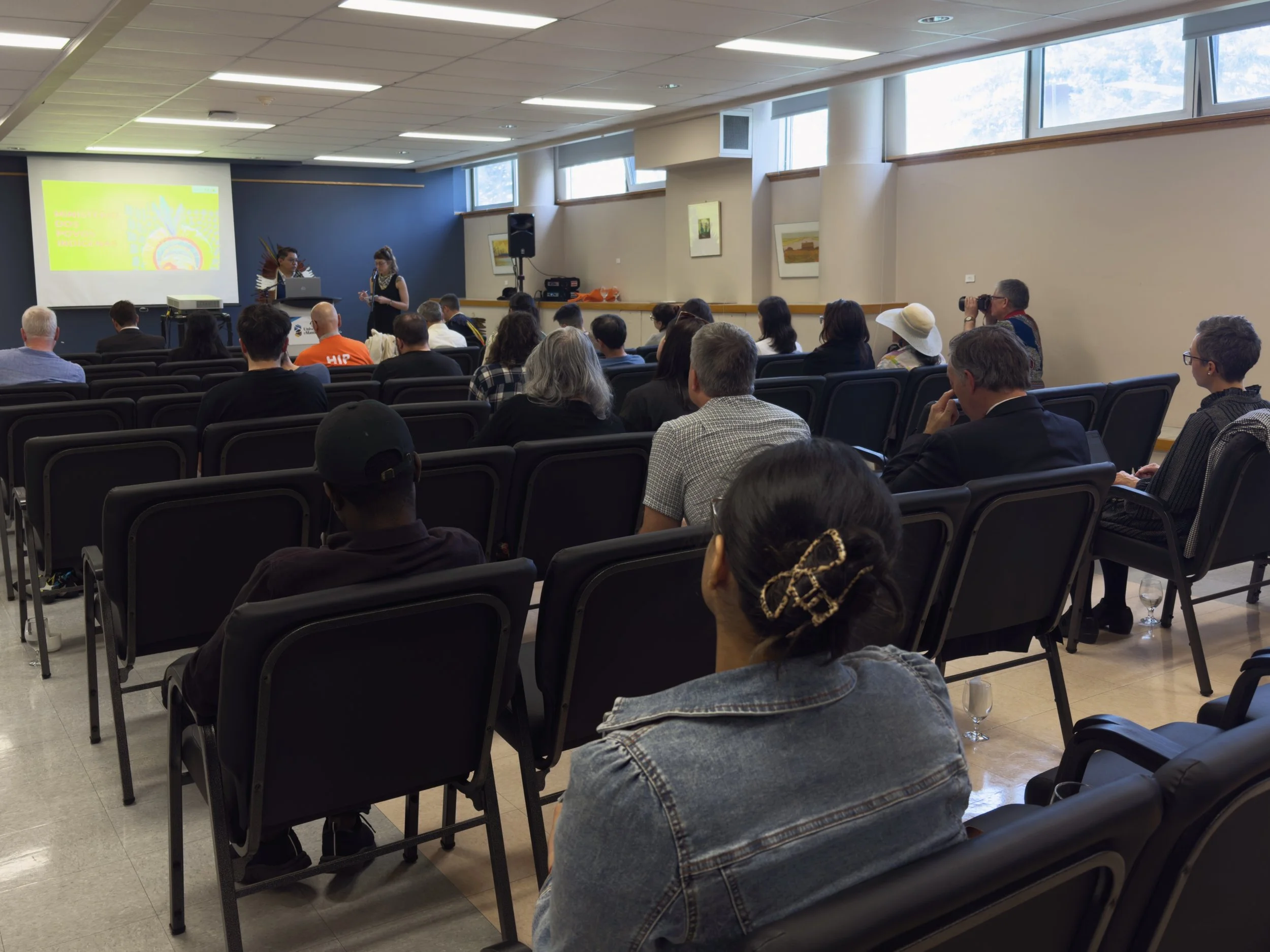
Audience during Dr. Eloy Tarana’s lecture. October 1, 2025. Photograph by Patrick Fermin.
These illegal invasion and exploitation of Indigenous lands was fought by the ministry in a lawsuit which successfully found perpetrators punished. To uproot these illegal activities and control what was actually going on on the ground, the government even closed air and waterway access to these. The lawsuit also prompted granting exclusive land rights to Indigenous people, ensuring they will not be invaded by mining companies once again. Despite this success, much work still needs to be done across Brazil to safeguard Indigenous rights. This is evident in the legislative branch presently pushing against executive decisions for rights expansion. Bill 490 is the most glaring example of this legislative pushback against Indigenous land rights. Also known as Marco Temporal, the bill would curtail Indigenous rights to claim land titles if they were not physically present on them on October 5, 1988, when Brazil’s Constitution was codified. Despite the great work of the ministry and the progress made for Indigenous rights, there is still work to be done. This work calls upon politicians, academic, Indigenous, and non-Indigenous peoples to come together to protect the natural world and Indigenous lands and rights.
Furthermore, Dr. Terana’s presentation, being on October 1, was a reminder of the work Canada still needs to do in addressing our own shortcomings to Indigenous people. With current plans to expand oil pipelines, and residential school deniers, Canadians must come together to ensure we protect Indigenous sovereignty. According to Indigenous Watchdog, 14 of the 94 Truth and Reconciliation’s calls to action have been completed, with 16 not being started, 22 stalled, and 42 in progress.[1] Further pressure by everyone across Canada should be applied to the government to ensure Indigenous rights are respected and ensured, and reconciliation is achieved. Dr. Terana’s presentation, and the work of the Ministry of Indigenous People in Brazil, is a reminder that reconciliation is an ongoing process of mutual respect.
[1] Douglas Sinclair, “TRC Calls to Action Status: September 1, 2025,” Indigenous Watchdog, September 6, 2025, https://www.indigenouswatchdog.org/2025/03/05/trc-calls-to-action-status-may-13-2022.