
A Brokenly-Motivated, “Working” System: Tracing the Borders with Dr. Alex Sager
Authored by Indiana M. A. Humniski
When it comes to “fixing” the system of the global refugee crisis, Dr. Alex Sager colloquially quips, “you can’t fix it, ‘cause it ain’t broke.” Dr. Sager, a professor of philosophy and university studies at Portland State University, delivered a keynote address on the first day of the “Identity in Motion: Literary Representations of Refugees, Exiles, and Immigrants,” an International Conference by UMIH Research Affiliate, Dr. Mariya Shymchyshyn, supported by the Institute and the Departments of German and Slavic Studies and English, Theatre, Film, and Media. Regarding this brokenly-motivated system of the global refugee crisis, Sager criticizes the common urge to label this system as broken as it is – in fact – doing the very thing it was set out to do: provide temporary solutions to long-term issues. However, while this system may be functioning as it was designed to work, this does not mean that the system is working sufficiently for society as a whole.

Image description: a hand placing a red pin on a indescriminate map of borders.
Sager began his presentation by prompting attendees to consider the idea of the Radical Imagination, declaring that we are, too often, “trapped by the limitations of our concepts, our assumptions, and our belief in what is possible” when it comes to political ideations. Further, he proposes that it is now time to continue “imagining a very different paradigm” when it comes to the rhetoric surrounding forced mobility and migration. In the pattern of historical and literary scholars alike, Sager suggests that we must turn to the past to inform how we approach the present.
Throughout his presentation, Sager suggests looking back to critical thinkers of the past – particularly, figures like Jean-Jacques Rousseau – to reconsider the formative idea of the Social Contract. He introduced new lenses to keep the concept more applicable to modern times; Sager cited the works of both Carole Pateman (The Sexual Contract 1988) and Charles W. Mills (The Racial Contract 1997) who explored Rousseau’s foundational text through female-focused and race-focused lenses respectively. These scholars both described how, in order for us to consider the workings of the Social Contract, one must first acknowledge the precursory subordination of women to men and non-white peoples to white peoples both implicitly and explicitly stated within the Contract. In the wake of these reinterpretations, Sager offers that it is now time to explore another layer alongside these expansions: the Sedentarist Contract.
Sedentarism can be understood as the state of existing – often comfortably – in a state or space for an extended period of time. The explicit immobility of this term places the Sedentarist in direct contrast with the imagined ideal that this conference is based upon exploring: the ever-mobile figure of the refugee, the exile, and/or the migrant. Sager describes the oppressive overtones of the Sedentarist Contract, defining the term as:
“The formal and informal agreements that states (in the name of [allegedly] immobile citizen populations) impose upon mobile non-citizen populations, attributing them subordinate civil standing [...] for the purposes of exploitation”
The keyword here, helpfully sandwiched by square brackets, is “allegedly.” Much like how Sager proposes that the bulk of conceptualizations about refugee populations are completely fictional, so too is the sedentarist mentality. Indeed, the sedentarist figure knows little about the refugee, not because of the refugee’s lack of story, but because of the sedentarist’s repeated desire to ignore, silence, or impose their own rhetoric onto the figure of the refugee; this pattern is reinforced by governmental attempts to position the superstition-splattered refugee as a vehicle upon which a nation may project its deepest anxieties. This concept is, unfortunately, incredibly relevant in our current political landscape.
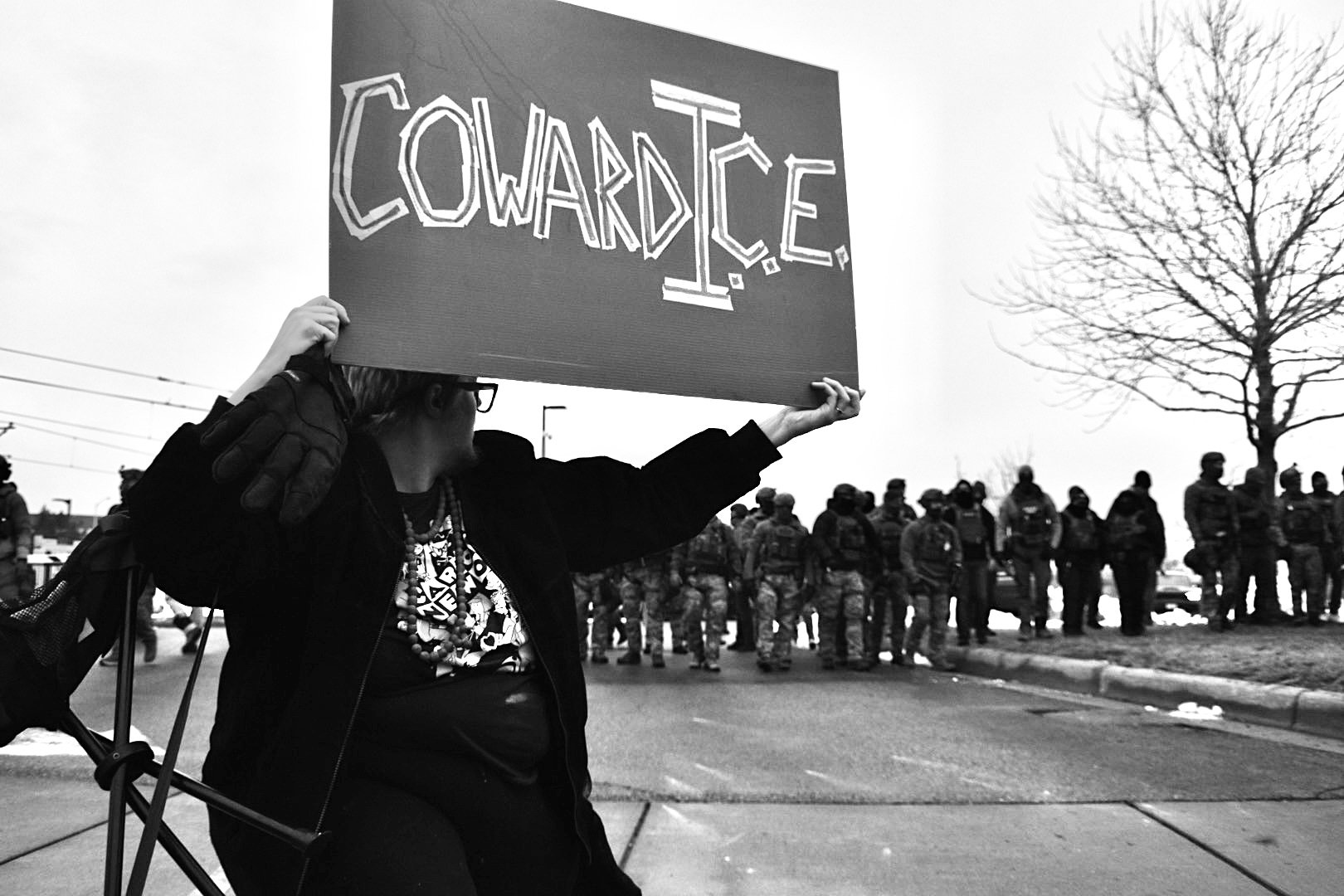
Photograph by Miles Novachis (@milesnovachisphotography)
At the hands of governmental institutions, refugees become caricatures that are cut out into a shape that fits the current narrative and coloured with chaos.
As we have seen throughout the recent (and not-so-recent) news cycles, the capital-R Refugee or the capital-M Migrant come to represent the worst of the worst in the hands of political agenda creators. These inhumane images pervade the conversations, behaviours, and media that we consume every single day. After turning humans into weaponized sterotypes, world leaders focused on facilitating ethnically-homogenous nation-states in turn feel justified to militarize inhumane organizations – such as ICE in the United States – to condemn and capture human beings who threaten the fabric of their oppressive ideal.
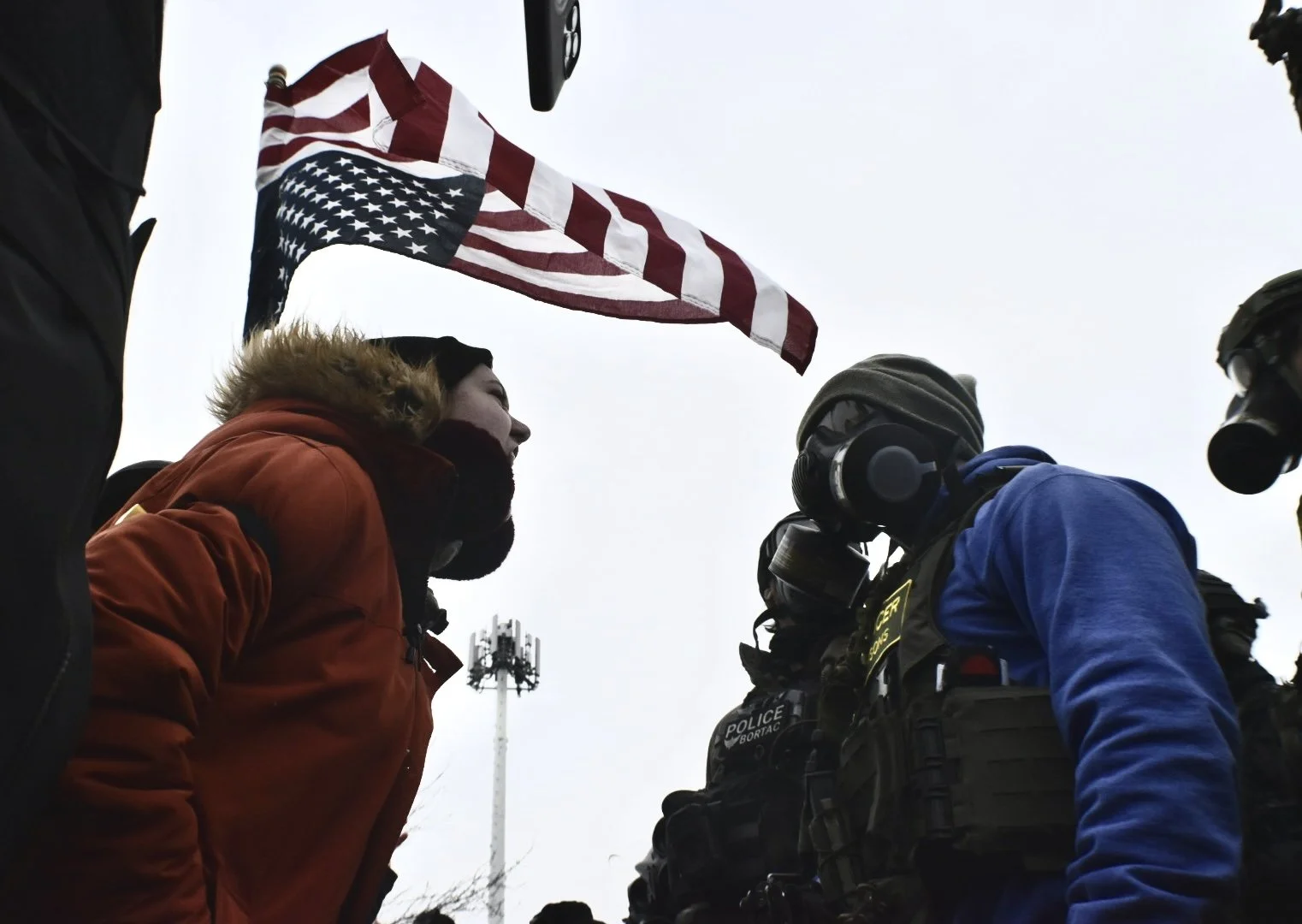
Photograph by Miles Novachis (@milesnovachisphotography)
Sager suggests that, in the wake of sedentarist and political agendas alike, we must “stop pathologizing movement.” In turn, he suggests that we begin to look at humans as not sedentarist versus mobilized and, rather, consider each and every one of us as a potential migrant. After hearing or reading about this proposed dynamic shift, one may recall a quote from famous Canadian author Margaret Atwood. Atwood states, "We are all immigrants to this place even if we were born here: the country is too big for anyone to inhabit completely, and in parts unknown to us we move in fear, exiles and invaders." Still, like all humans, the creation of solutions in response to this global crisis feels incredibly mobile, shifting and reshaping with each new day.
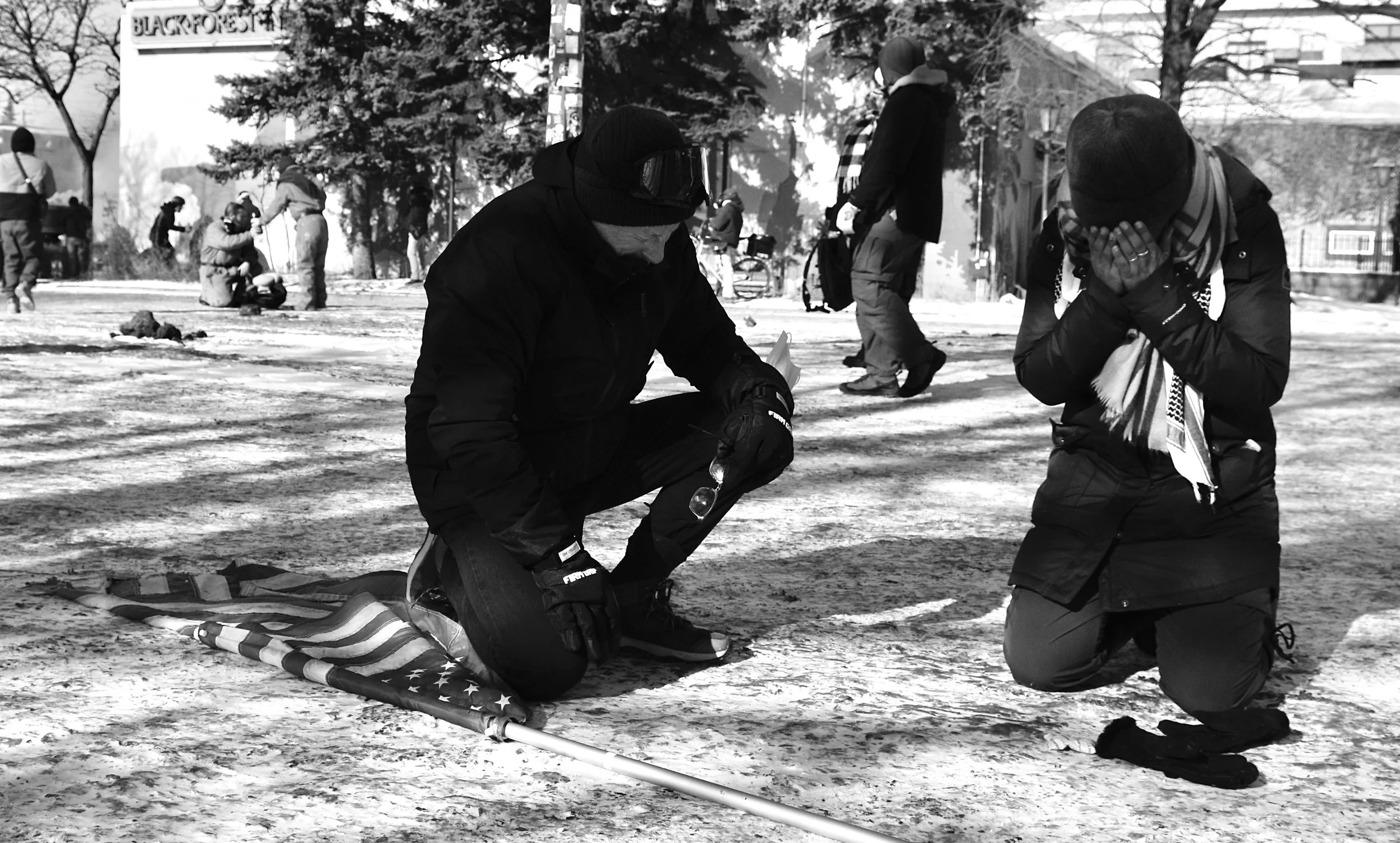
Photograph by Miles Novachis (@milesnovachisphotography)
With the fickle state of democracy resting within the hands of increasingly unpredictable and untrustworthy leaders, perhaps we must rely on these more comprehensible truths to remain both sane and focused on the steps ahead of us. The final effect of Sager’s keynote address prompted attendees to brainstorm ways to keep pathology away and bring people to the forefront of our discussions – a simple truth that many political figureheads are obviously yet to learn.
I’d like to extend special gratitude to the photojournalistic work of Miles Novachis (@milesnovachisphotography), a former UManitoba student and photographer based in Minnesota, for his visual contributions to this article and continued efforts to bravely document the numerous injustices taking place in his home state.