
Woman Seeking “New and Curious Sights”: Feminism & Victorian Zoological Gardens with Shelby Stymeist
Authored by Indiana M. A. Humniski
PhD Candidate Shelby Stymeist’s interest in historical zoology first sparked at a literary conference held by the Victorian Studies Association of Western Canada as the keynote speaker, Lianne McTavish, presented her research on the nineteenth-century Banff zoological garden. Although Stymeist had never heard this term before observing McTavish’s keynote address, a proverbial cabinet of curiosities had been unlocked within her mind; in its wake sprang forth Stymeist’s thesis topic: exploring women’s roles and relations to zoological gardens and menageries in the Victorian period.
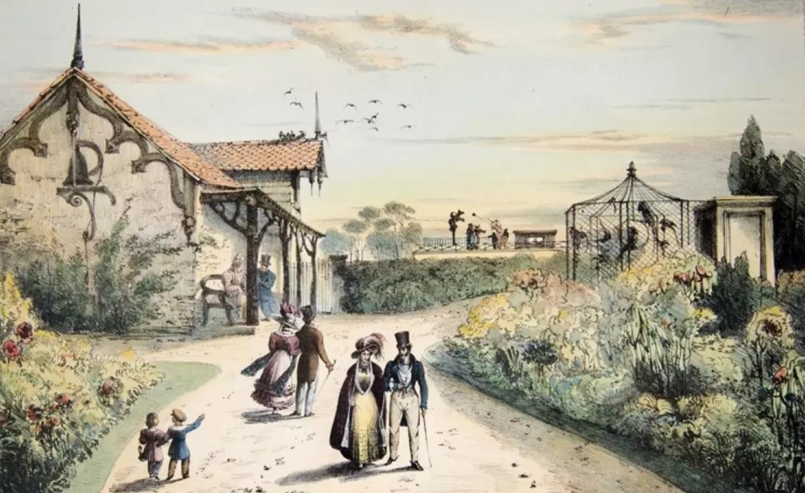
Victorian illustration of couples walking through a lush zoological garden space.
In the nineteenth century, zoology skyrocketed in popularity. The proliferation of animal exhibitions, in the form of menageries and zoological gardens, became both a pastime and profession that fed the populace’s scientific and social appetites. Stymeist’s dissertation centres upon an understudied demographic in this historical chapter: women.
Before diving into a feminist-focused lens on menageries and zoological gardens, we must first examine the difference between these two spaces. Stymeist shared that menageries were itinerant or static spaces consisting of smaller collections – and smaller cages – that were more focused on facilitating commercial and/or entertainment-based outcomes. She also provocatively quipped that these spaces were often thought of as areas of “debauchery [...] places for the lower classes to engage in vice.” However, even amid these mysterious claims of debaucherous activity residing in the archive, menageries often handed out pamphlets to help viewers learn about the animals on display if they so wished. When an eager attendee asked Stymeist to define the specific “debaucheries,” Stymeist hypothesized that these rumours often harped upon by scholars may have been merely due to the fact that menageries were open to all classes of people from their origin – unlike zoological gardens (on paper.)
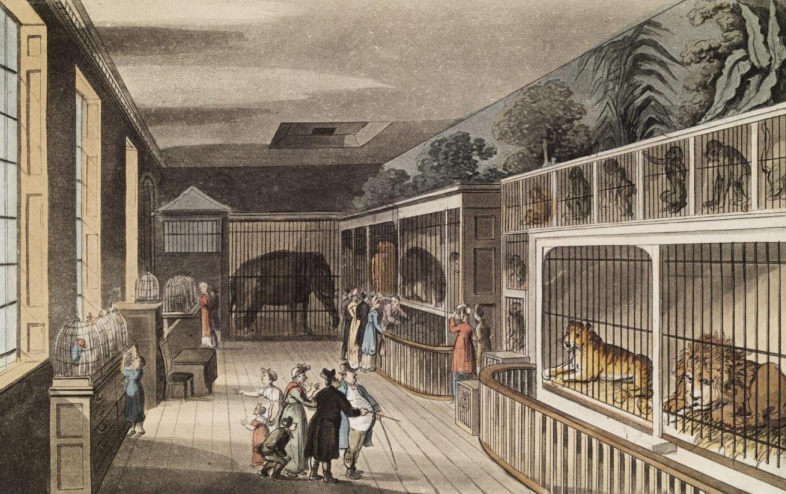
Victorian illustration of differently-aged people surveying stacked animal cages.
Now that we know what a menagerie is, it is now time to define another sort of space: the zoological garden. One may think of the ideal zoological garden as, at times, an antonymical space compared to the menagerie, boasting both larger and more diverse collections fixed in one location with a focus on science and education. In 1828, the Zoological Society of London established Britain’s first zoo located in (you guessed it!) London. The construction was inspired by the La Ménagerie du Jardin des Plantes in France (opened in 1794). The institution – now simply the London Zoo – was designed as a socially exclusive space for middle and upper classes to study and practice zoology. The study of zoology was deemed as “rational recreation” – importantly, menageries were also classed as such due to their provision of basic lectures and educational pamphlets. In spite of the exclusive image that the Zoo presented, people of all classes attended the exhibits – some even forging tickets to enter prior to the 1847 expansion of attendee classes– proving the institution as accidentally inclusive, in terms of class divisions, from the very beginning.
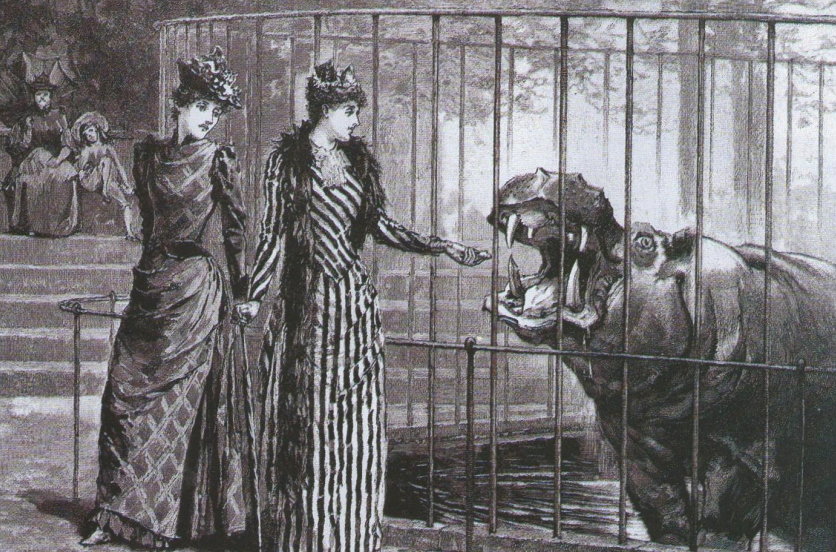
Victorian illustration of two women in front of a caged hippopotamus, feeding it.
Stymeist proposes that these zoological gardens served as feminist, liminal spaces for women and girls as they were transformative areas where they were able to grow in social, political, and occupational spheres. Still, Stymeist acknowledged throughout her presentation that the capturing, caging, and keeping of wild animals is often thought of as symbols of male and imperial power – each topic being independently studied at great length. However, she proposes that these zoological gardens, whilst concurrently dripping with imperialist allegory, also provided women and girls a way to gain their own independence – even if they were still surrounded by cages that mirror their own social limitations. Her dissertation discussing this very claim is split up into five chapters which cover the topics of education, science, socializing, and the keeping of animals.
In her chapter regarding education, Stymeist discusses the “real world educational benefits of visiting the zoo.” Further, she interrogates how the introduction of zoos within society led people to write texts encouraging “kind and compassionate methods” to handle, care for, and advocate for wild animals – an attitude which she reiterates in her final chapter on animal keeping. The rise in zoological popularity opened the gate for amateur scientists – many of them being women – to write their own zoological reflections upon visits to these institutions. Thus, Stymeist was met with a plethora of newspapers and magazines alongside fictional texts that depict these spaces as places where women step into the male-dominated field of the sciences beyond the “citizen science” spaces that they had previously been limited to.
One of the texts that she points to is Louisa May Alcott’s short story “My May-Day Among Curious Birds and Beasts” (1872) – in this tale, Alcott’s protagonist walks around the zoo and describes each animal in great detail (one of which, interesting in the Canadian context, is a bison!). In her chapter focused on socialization, Stymeist depicts zoos as social spaces as well as scientific ones. In fact, one of the sources she cites within this chapter follows a couple who yearn to get married INSIDE the lion’s cage at a menagerie (yikes!) – this was an idea that elicited at least one gasp out of the attending crowd.
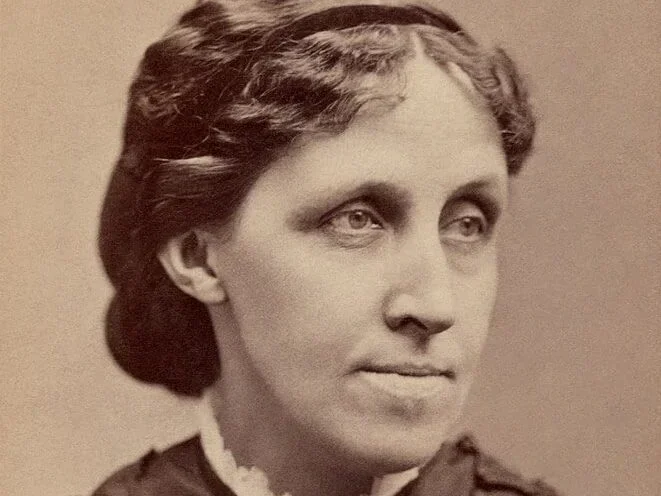
Photograph of Louisa May Alcott, an author most known for her novel Little Women.
Alongside featuring the famously feminist figure of Alcott, Stymeist drew attendees’ attention to a woman by the name of Sophia Raffles. Raffles was the first woman to become a fellow of a zoological society. She was also the memoir-writer and wife of the founder of the Zoological Society of London, Thomas Stamford Raffles. Sophia Raffles was decidedly not an idle observer within the zoological realm; in fact, Stymeist regaled us with tales of how Raffles accompanied her husband on his travels to the East Indies, gave birth to five children there, and even slept nights in the jungle when they were unable to return to their established camp. Her husband reflected in a letter fragment that she shared with us how “Both Sophia and myself pass many happy hours among the flowers, the birds, and the beasts.” It is no wonder, with this letter in mind, that Raffles shared her husband’s love of botany alongside their zoological pursuits. While it is important to discuss Raffles as a scientist in her own right, it is also key to think of her as a memoir author; her labours of penning her husband’s memoirs both showcase her as a preserver of his memory but also reveal her deep valuing of zoological science – something that she focalizes within her written work and personal life.
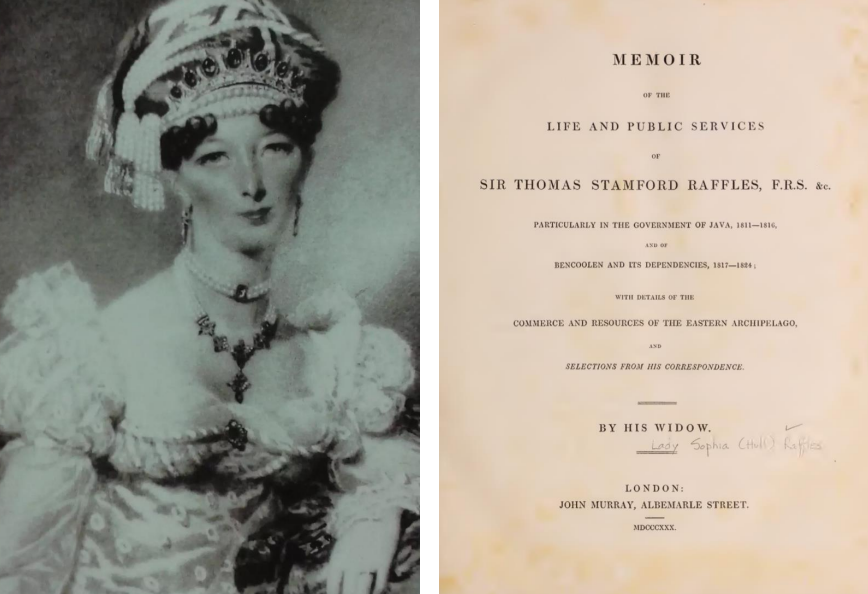
Photograph of Sophia Raffles alongside the frontispiece for her husband’s memoir.
When discussing her chapter on the keeping of animals, Stymeist pointed to another famous female figure in the zoological space: Mary Elitch Long. Long was the first woman in the nineteenth century to own and operate a commercial zoo. Like most other female owners, she inherited the business after the death of their husbands – yet, it is important to note that she also opened the zoo in tandem with her husband. Long managed the gardens for an impressive span of 25 years, a record that she details in her memoir entitled The Only Woman in the World who Owns and Operates a Zoo (1898). The work’s images of Long within the animal cages, such as the bear pit, make it impossible to forget how quickly iron cages and fenced enclosures begin to resemble the societal restraints placed upon women as well as kept animals.
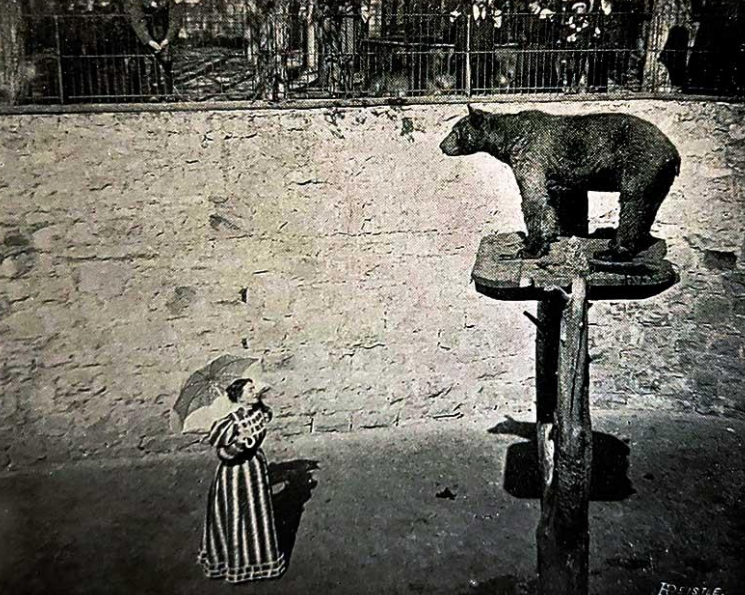
Victorian photograph of Mary Elitch Long in the bear pit at her woman-run zoo.
In her final chapter, Stymeist discusses how the rates of animal cruelty grew alongside the popularity of zoological gardens, like codependent plant species. Reports of abuses in menageries were legally complicated by the idea that captive animals were not included in protection laws as they were not domestic animals. Stymeist reckons with female dissenters to the trend of animal cruelty by citing texts such as Saki’s short story “The Mappined Life” (1919) which directly compares the animal life in captivity alongside the oppressiveness of sexism on women and Emily Brontë’s poem “And Like Myself Alone, Wholly Alone” (1841).
Brontë’s poem, in particular, is entirely haunting:
Could my hand unlock the chain,
How gladly would I watch it soar,
And never regret, and never complain
To see its shining eyes no more.

Stock image of an antique door handle and old-fashioned lock, close-up shot.
These literary records prove many women turned to authorship to explore the ethics behind the same zoological gardens that provided them such a wealth of freedom whilst, in the process of supporting these spaces, supporting the “caged existence” of similarly oppressed figures. As these works were published and publicized, alongside a number of similar concerns expressed in other ways, more animal welfare laws emerged to ensure the safekeeping and humane treatment of wild as well as domestic animals.
This concept of human entrapment struck a chord in attendees, as made evident within the event’s Q&A period. Attendees engaged Stymeist in the question of colonialism and Imperialism that is both implicitly and explicitly stamped onto the institution of zoological gardens. As the group discussed, there is, undoubtedly, a nuanced connection to be drawn between the proverbial cages placed upon white women in the Victorian period and much more literal cages. Towards the end of the conversation, attendees conversed about the importance of highlighting multiple historical contexts ranging between the ongoing slave trade occuring in the background of Stymeist’s earlier featured texts and, in the background of her later texts, the inclusion of human zoological exhibitions where racialized peoples were placed on display for an observing white populace.
It is intriguing to consider the coexistence of both freedoms and captivities created by both the existence of zoological gardens as well as the patrons and planners behind them. While one can acknowledge the important feminist freedoms that these Victorian environments allotted for some members of the human race, it is also important to consider the inherent violences also entrapped within similar spaces; this dialogue filled my mind as I thanked Shelby for her presentation, left the Reading Room, and sat down to pen the event proceedings for our UMHumanities readers – near and far.
– – –
Upon my later editing of this article, I would like to congratulate Shelby on presenting her work at the VSAWC (Victorian Studies Association of Western Canada) Victorian Trade Conference on May 1st, 2026, which had the UMIH as one of the co-sponsors.
It feels like a lovely full-circle moment considering Shelby’s inspiration sparking for this project at a previous conference for this same organization. I was lucky enough to volunteer at this incredible gathering of scholars alongside fellow UManitoba students (and fellow budding Victorianists), Natasha Diachun and Abbey Fedora.